Pigeons in the Military, Police and Trafficking Service
Military
In the late 19th and early 20th century, homing pigeons were frequently used as message carriers within European battle zones.
Equipped with a small message capsule, pigeons would carry messages between troops and allies, alerting people if soldiers were
captured behind enemy lines. They would also provide important time sensitive information that couldn't be sent by other means.
Pigeons were hard to detect, difficult to shoot down, and fast commuters.
In 1903, German Engineer Julius Neubronner combined a small analogue camera with a mechanical timer and attached it around a pigeon's neck.
This innovative approach to aerial photography soon raised interest from the German military. Shortly thereafter, exploring the potential
for secret aerial photography carried out by pigeons began in earnest.

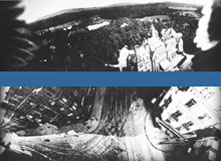
pigeon carrying camera
By Word War II entire "Pigeon Corps" had been established, serving both the Army and Air Force of several countries including England,
Germany, France and the United States. Pigeon fanciers were consulted and encouraged to donate special breeds, and to provide expertise
in pigeon handling and training to the military. Collaborations between pigeon fanciers and military personnel started to occur more
frequently. In fact, the human pigeon handlers dedicated to the war messaging service became fondly known as the "Pigeoneers" by American forces.

Several decades later during the Vietnam War, the US Military developed a small radio-tracking device for attaching to homing pigeons. The idea was
to capture the birds belonging to the Vietkong and follow their flight path home. Knowing the pigeons’ destination would help the US find hidden
enemy camps. Pigeons have continued to be used in military and other governmental efforts. More recent examples include their alleged use by
Iraqi troops during the second gulf war in 1991, and as discussed briefly below, as messengers for the Indian police in the state of Orissa,
and to traffic illicit goods across state borders in South Africa, Pakistan, Afghanistan, Mexico and the US.





 -
- 